
Gene Regulation and RNA Systems Biology

What we do.
We aim to understand the regulation of gene expression in its full complexity using molecular, systems and cell biological tools in human cells and C. elegans.
RNA is at the center of this regulatory complexity; every aspect of its lifecycle can be regulated, from its production and processing to its intracellular localization and degradation.
Through our research we aim to answer questions such as:
· How are the instructions, when and how a gene is expressed, encoded in the DNA?
· How are the many gene regulatory mechanisms coordinated to ensure proper functioning of the cell?
· How do genetic mutations change normal processing and ultimately lead to disease?

Who we are.
The Mikl Lab is located at the Department of Human Biology of the University of Haifa, Israel. It was established in fall 2020 and strives to be a diverse, inclusive and interdisciplinary group of scientists.
We are driven by scientific curiosity as well as the conviction that elucidating the basic principles of biology is the foundation for understanding disease states and developing new therapeutic strategies.
Selected Publications
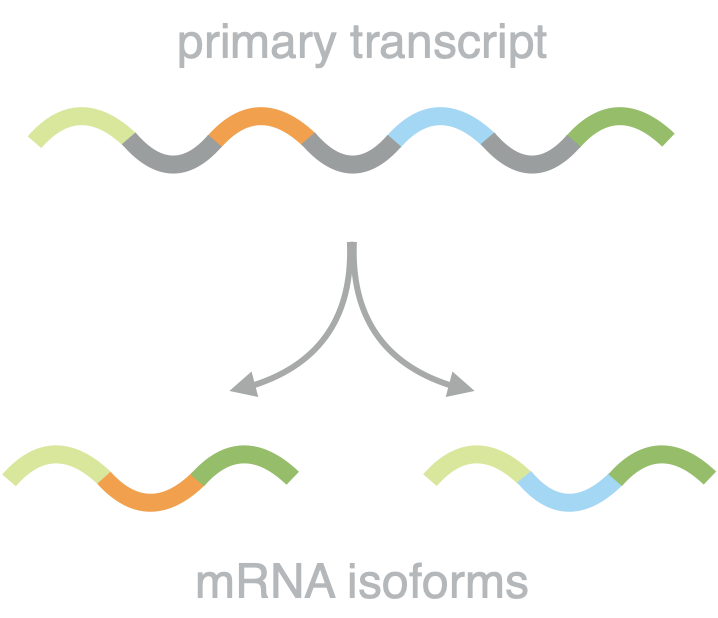
Promoter identity shapes splicing outcomes and fidelity
Shaked Shanas, Anton M. Schwartz, Noa Nesher, Avital Melnik, Martin Mikl. Nature Communications 17, 9375 (2026).
Gene expression is a complex process subject to regulation at multiple functionally interconnected levels. One prominent example is the crosstalk between transcription and splicing regulation. Past work has shown that transcription can influence splicing in multiple ways, but a systematic investigation of this complex interplay is lacking. Here we employ massively parallel reporter assays of large combinatorial promoter-splice site libraries to dissect how promoter identity and transcription dynamics affect alternative splicing in human cells. We find that promoter identity, rather than expression level, exerts strong and highly context-specific effects on cassette exon inclusion, exceeding the effect of pharmacological inhibitors of transcription initiation or elongation. Groups of exons display coordinated promoter-dependent splicing behavior, and we identified predictive sequence and structural features underlying this sensitivity. Promoter and gene architecture also shape isoform diversity by modulating cryptic splice site usage. These findings present promoters as central regulators of splicing outcomes and fidelity.

Martin Mikl, Davide Eletto, Minkyoung Lee, Atefeh Lafzi, Farah Mhamedi, Simona Baghai Sain, Kristina Handler, Andreas E. Moor. Nucleic Acids Research 50(18), 10643–10664 (2022).
Intracellular localization of mRNAs is crucial for functional compartmentalization of many cells such as neurons, but we still lack a systematic understanding of how the transcript sorting machinery works in a sequence-specific manner. Here we performed the first massively parallel reporter assay for RNA localization in neurons. This revealed how the localization potential is encoded in the 3’UTR sequence. By combining high-throughput assays, biochemistry and bioinformatics we obtained novel mechanistic insights into this important regulatory mechanism and identified novel players and sequence elements involved in mediating mRNA dendritic targeting or soma restriction.

High-throughput interrogation of programmed ribosomal frameshifting in human cells
Martin Mikl, Yitzhak Pilpel, Eran Segal. Nature Communications 11, 3061 (2020).
Programmed ribosomal frameshifting (PRF) is a strikingly robust and precise process by which the ribosome shifts reading frame in a defined fraction of translation events, leading to the production of two different proteins from the same mRNA. This process is most prominent in viruses like HIV and SARS coronavirus, where it is a widespread and indispensable mechanism to regulate the production of key enzymes. Here, we developed a massively parallel reporter assay that allows for accurate high-throughput quantification of ribosomal frameshifting in human cells. We combined the power of fluorescent frameshifting reporters with rational design of DNA sequences, which allowed us to systematically decipher determinants of PRF efficiency across frameshifting events and assay natural variation in HIV gag-pol frameshifting, providing the first systematic large-scale investigation of ribosomal frameshifting.